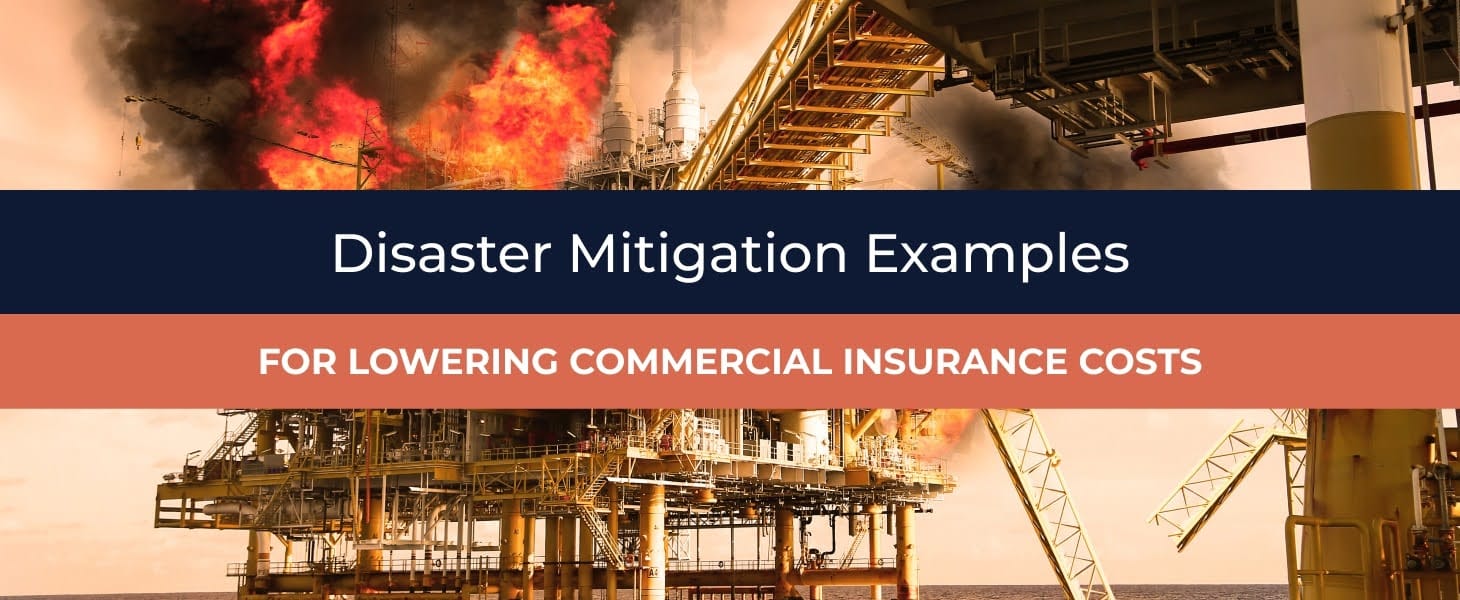
Disaster Mitigation Examples For Lowering Commercial Insurance Costs
Rising commercial insurance costs can feel like a direct threat to your survival. Every year, premiums climb—even when nothing about your coverage changes. For many owners, the real fear isn’t just the budget drain, but the possibility that one disaster could erase payroll, property, and everything you’ve worked to build. By learning from practical disaster mitigation examples, you can take back control, lower premiums, and strengthen your business resilience.
Key Takeaways
- Proactive disaster mitigation measures can reduce commercial insurance premiums by up to 25% through insurer risk-based discounts.
- Fire prevention systems, flood barriers, and structural upgrades provide immediate premium savings while protecting business assets.
- Comprehensive risk management programs demonstrate lower risk profiles that qualify businesses for enhanced coverage options and reduced rates.
Understanding The Insurance-Mitigation Connection
Insurance companies don’t just price your policy based on location or square footage. They look closely at the risks your property poses and how well you’ve controlled them. Every hazard you mitigate—whether fire, flood, or structural weakness—directly affects their actuarial models.
The Economics Of Risk Reduction
Think of mitigation as an investment. When you install flood barriers, reinforce roofing, or modernize fire suppression, you reduce both the likelihood and severity of claims. Fewer claims mean insurers need to reserve less capital, and that savings trickle back to you through lower premiums.
- Premium reductions: Verified mitigation measures often reduce rates by 5–25% (NAIC). If you’re paying $30,000 annually for property insurance, that’s $1,500–$7,500 in savings each year.
- Deductible reductions: Some carriers lower deductibles for businesses with strong risk management, which means you pay less out of pocket when disaster strikes.
- Enhanced coverage: Demonstrating resilience can qualify you for broader coverage options that competitors might not access.
How Insurers Evaluate Mitigation Efforts
Insurers want evidence. It’s not enough to say you’ve “upgraded fire safety.” You need to prove it with documentation, certifications, and clear maintenance records. Think of it like presenting your business case to an underwriter.
Key Evaluation Categories
- Structural improvements: Seismic retrofits, impact-resistant roofing, hurricane shutters.
- Operational procedures: Employee safety programs, inspection routines, cybersecurity controls.
- Emergency preparedness: Business continuity and disaster recovery plans.
What Proof Matters Most
- Engineering reports: Independent assessments verifying seismic or structural upgrades.
- Third-party certifications: NFPA fire system certifications, ISO standards, or local code compliance approvals.
- Maintenance logs: Regular inspections of sprinklers, backup generators, or water sensors.
- Photographic evidence: Before-and-after images of upgrades.
When you package these materials into a structured portfolio for insurers, you shift the conversation. You’re no longer just another business applying for coverage—you’re presenting yourself as a lower-risk, proactive partner.
Structural Disaster Mitigation Examples
Physical reinforcements are often the most visible and impactful. They not only secure your building but also serve as proof points to insurers that you’re reducing catastrophic risk.
Building Reinforcement And Retrofitting
Many buildings suffer from structural weaknesses that amplify disaster damage. Reinforcing these areas reduces catastrophic loss potential and often qualifies a property for premium discounts.
Common Reinforcement Measures:
- Foundation bolting to reduce earthquake shifting.
- Wall bracing for cripple walls.
- Roof strapping to resist hurricane-force winds.
- Impact-resistant windows or storm shutters.
Even if you can’t retrofit everything at once, targeting your biggest vulnerabilities—identified through hazard assessments—offers the best return on investment.
Facility Systems Upgrades
Beyond structural walls and foundations, critical building systems need protection. Floods, power outages, and fires often damage electrical panels, HVAC units, and water systems, disrupting operations and driving claims.
High-Impact Upgrades:
- Elevating utilities above flood levels.
- Installing backup generators for power continuity.
- Smart water detection systems to prevent hidden leaks.
- Fire suppression systems with modern reach.
Insurers often reduce rates if you can show code compliance certificates and maintenance records for these systems.
Disaster Mitigation Examples in Fire Prevention and Suppression
Fire remains one of the top causes of insurance claims, responsible for billions in annual commercial losses. Investing in detection and suppression technology is one of the clearest ways to prove reduced risk.
Advanced Detection Technologies
- Intelligent smoke detection: Differentiates between steam and smoke to avoid false alarms.
- Heat signature monitoring: Detects abnormal heat before flames appear.
- Video smoke detection: Uses AI to scan camera footage for fire indicators.
Premium reductions for certified detection systems typically range from 5–15%, and documentation of professional inspections can increase the discount.
Suppression System Innovations
- Clean agent systems: Non-damaging gas suppression for data centers.
- Water mist systems: Lower water usage, less secondary damage.
- Pre-action sprinklers: Require dual triggers, avoiding accidental discharge.
Integrating suppression systems with building management platforms shows insurers you’ve created a connected, responsive safety network.
Disaster Mitigation Examples for Flood and Water Damage
Water damage is the single most common property insurance claim, costing U.S. businesses over $2.5 billion annually. That makes water mitigation a priority for insurers.
Site-Level Water Management
- Grading and landscaping to direct water away from foundations.
- Waterproof membranes and sealed foundations.
- Storm drains and sump pumps tested monthly.
Interior Water Damage Prevention
- Annual plumbing inspections and valve testing.
- Leak detection systems integrated into building management.
- Employee training to shut off main water lines quickly.
By documenting inspections and demonstrating proactive maintenance, you position your property as lower-risk, earning rate reductions.
Disaster Mitigation Examples for Severe Weather Preparedness
Depending on your region, hurricanes, tornadoes, or wildfires may be the most pressing risks. Insurers price policies with these hazards in mind.
Hurricane And High Wind Protection
- Reinforced roofing with secure attachments.
- Storm shutters and impact-resistant glass.
- Backup power systems to maintain operations.
Documented improvements can reduce premiums by 10–20%, particularly in high-risk states like Florida or Louisiana.
Wildfire Defense Strategies
- Creating defensible space with vegetation management zones.
- Fire-resistant siding, roofing, and landscaping.
- Gutter cleaning and sprinkler systems.
These measures drastically lower ignition risks, making your property more attractive to insurers.
Operational Risk Management Programs
Physical protections are only part of the equation. Insurers also want to see operational programs that minimize human error, reduce downtime, and ensure continuity.
Business Continuity Planning
A tested continuity plan can cut downtime by 60% after a disaster (FEMA). Insurers see this as proof you’ll recover faster, meaning claims are less costly.
Essential Elements:
- Defined recovery objectives.
- Alternate suppliers and backups.
- Emergency communication strategies.
- Regular testing and staff training.
Employee Training And Safety Programs
From workplace safety to cybersecurity, training reduces accident frequency. OSHA notes that effective training programs cut incident rates by 40%.
Keep documentation: insurers want to see records of drills, certifications, and participation.
Monitoring And Early Warning Systems
Modern monitoring technology can alert you to risks before they escalate:
- Environmental sensors for moisture or gas leaks.
- Equipment monitoring to detect failures.
- Real-time weather alerts.
Insurers interpret these tools as evidence that you are actively reducing risk, which often translates to reduced premiums.
Take Control Of Your Risk Management With FIRM
Proactive disaster mitigation doesn’t just protect your properties—it directly impacts your insurance costs and long-term financial performance. With FIRM as your partner, you get more than just emergency response support; you gain a strategic advantage in risk reduction, compliance, and cost control.
Here’s how FIRM helps you lower insurance premiums while improving operations:
- Centralized Incident Management: Streamline vendor coordination and response times with a 24/7 managed portal.
- Verified Compliance & Documentation: Provide insurers with a transparent record of mitigation measures and certified reports.
- Vendor Oversight & Invoice Auditing: Ensure fair pricing, correct implementation, and reduced claims disputes.
- Real-Time Visibility: Track incidents portfolio-wide with dashboards that highlight cost, type, and source.
- Preparedness Audits & O&M Review: Strengthen your Operations & Maintenance plans to satisfy insurer risk assessments.
- Data-Driven Insights: Identify recurring risks and systemic issues to negotiate more favorable insurance rates.
- Proven ROI: Clients report reduced downtime, lower incident costs, and measurable insurance premium savings within a few years.
Don’t wait for the next disaster to highlight gaps in your risk strategy. Align your teams, prove your compliance, and reduce costs with FIRM today.

Related posts

The Power to Choose Restoration Vendors is Dwindling
Who do you call when pipe breaks and flooding events require immediate attention
Multifamily Property Owners Can Benefit from the SB 721 Inspection
California multifamily property owners have until January 1, 2025 to complete th
Why Most Incident Management Systems Don’t Work
Commercial property owners and managers: What would you do when several days of